Children often come to therapy when they are displaying difficulties adjusting- this may manifest as behavioral difficulties, increased feelings of sadness and isolation, or thoughts of self-harm or suicide, to name a few. As a parent, seeking support from a therapist for their child(ren) can be a really difficult step to take. It can feel like a sense of helplessness; it can feel confusing; for some, it can even feel like a failure. These challenges can sometimes arise during significant life transitions.
In a lot of ways, working with children (in therapy) is different than working with adults. More specifically, children may not yet have developed the verbal and emotional language to express how they feel. This is the reason behaviors are what is first noticed- behaviors are the child’s way of communicating their feelings. So, what can be done to support a child when they may not have the verbal language? What do we do when talking is not enough?
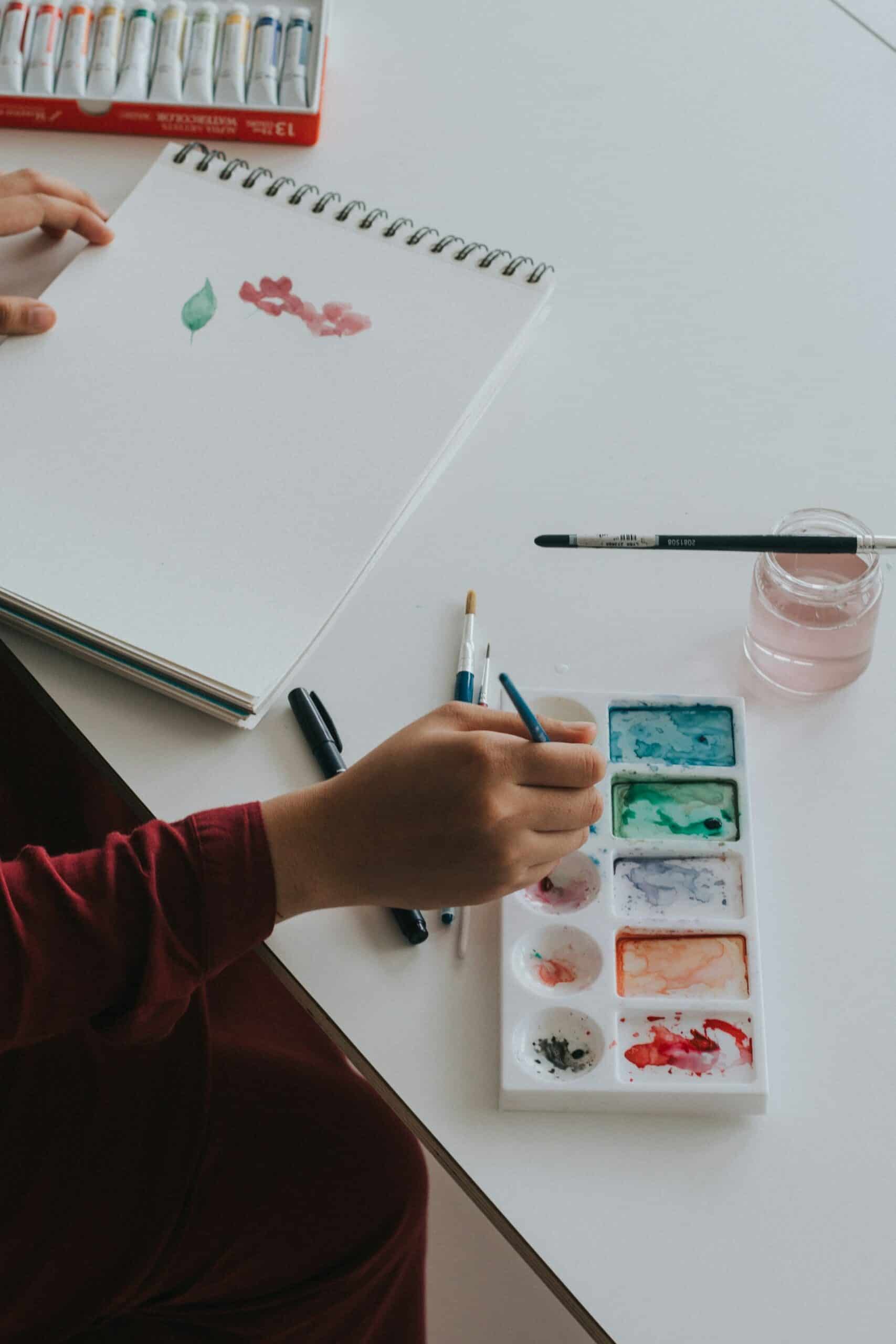
Before someone develops the ability to verbally communicate, they navigate the world through exploration (play) and images (art). As a therapist, I can gain insight into the child’s worldview by entering into their explorative and expressive world. For example, how a child approaches an art directive or art media, may be reflective of how the child approaches other aspects of their life. Story-telling is also a component of art and play therapy, which could offer insight into their internal or external conflict and conflict resolution styles.
The processes of art and play promote focus, creativity, exploration, and expression. They also serve as a distraction from difficult conversations, which fosters a reduction of anxiety. In general, someone is more likely to be engaged in therapy when they feel relaxed, which in turn, allows them to benefit more greatly from the session. For children, the art and play provide that engagement.
The art and play also create a safe emotional distance from the “problem,” and it allows the child to work with it (literally) and through it (metaphorically). In a therapeutic setting, the art and play can lend to, what is known as, a corrective emotional experience. Therefore, children may not directly communicate what is causing them difficulty- remember, their behaviors are what initially brought them to therapy- yet change can still occur because of the process itself. As a therapist, it is not fair to assume the child thinks and feels a certain way solely because of an art or play activity that occurred during session. This can be a very difficult concept to accept. We have to trust that processes can occur- absent of direct, concrete language- that will elicit long-term change. Art and play therapy are two ways in which that change can occur. These approaches can also be helpful for children experiencing trauma. Although different from traditional talk therapies, they are effective treatment approaches.
- For more information on art therapy: https://arttherapy.org/
- For more information on play therapy: https://www.a4pt.org/